
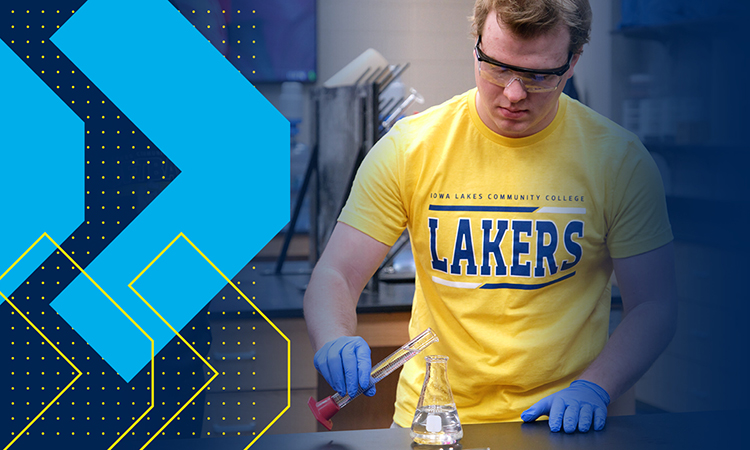
Begin Your Future with a Chemistry Transfer Degree
Discover how chemistry shapes the world around you and explore a field bursting with career possibilities. The Chemistry Transfer Major degree at Iowa Lakes provides a strong foundation in chemical sciences, preparing you for careers in chemical engineering, pharmacology, forensic chemistry, teaching, and more.
Earning your Chemistry Transfer Major degree at Iowa Lakes allows you to transfer seamlessly to prestigious universities such as the University of Northern Iowa, the University of Iowa, and Iowa State University. Our curriculum covers General and Organic Chemistry, complete with hands-on lab experiences and calculus coursework, ensuring you develop the analytical and technical skills required for advanced study and professional success.
Completing your AS degree will fulfill all general education and chemistry prerequisites for your chosen transfer institution. Your transcripts will reflect your transfer major, making your transition smooth and efficient. Our experienced advisors are here to guide you, ensuring that your coursework aligns perfectly with your future university’s requirements.
Explore career pathways and salary expectations in chemistry-related fields through the U.S. Department of Labor’s Occupational Outlook Handbook. Ready to take the next step? Connect with an enrollment coach today and start building your future in chemistry!

Find Your It!
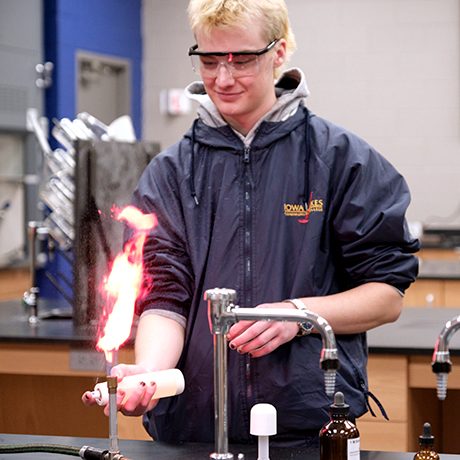
Your Pathway to a Chemistry Career Starts Here!
A Foundation for High-Demand Careers
A Chemistry Transfer Major opens the door to diverse career opportunities, from laboratory research and pharmaceutical development to environmental science and education. Whether you plan to pursue a bachelor’s degree, enter the workforce, or continue with graduate studies, Iowa Lakes provides the knowledge and hands-on experience you need to succeed.
Seamless Transfer to Your Chosen University
Completing your Chemistry Transfer Major Degree at Iowa Lakes ensures you meet all general education and major-specific requirements for your intended four-year institution. Since transfer requirements can vary, working closely with an advisor is essential for staying on track and maximizing your academic potential.
Program Details
Length

4 terms
Degree
Associate in Science (64 credits)
Campus
Estherville
Additional Information
Term 1
CHM 166 – General Chemistry I
The properties of matter in terms of modern chemical principles. The topics covered are measurements, stoichiometry, atomic structure, chemical reactions, periodic relationships, gas laws, thermochemistry, quantum theory, solutions and equilibrium and inter-and intra-molecular forces. Problem solving in each of the areas is included. Lecture and laboratory.
Prerequisites: High school chemistry and mathematics
ENG 105 – Composition I
Emphasis on expository and argumentative writings including a review of usage and mechanics.
Prerequisites: Satisfactory score on the ACT, Accuplacer, ASSET, COMPASS as determined by Iowa Lakes policy
MAT 211 – Calculus I
A general course in differential and integral calculus and its applications. Topics include limits and continuity; differentiation; application of differentiation; integration; logarithmic, exponential and other transcendental functions; and applications of integration.
Prerequisites: MAT 127 – College Algebra and Trig or equivalent
MAT 210 – Calculus I
This course is the first of a series of three courses. The purpose of the sequence is to provide the student with a foundation in calculus and analytic geometry. Those students enrolled in the science, math, engineering, computer science, and similar fields, will also gain proficiency and develop an understanding how these tools will be used later on in their studies. Topics include analytic geometry, differentiation, and applications of derivation and integration. Graphing calculator required.
Prerequisites: MAT 127 – College Algebra and Trig or MAT 129 – Precalculus
SDV 103 – Successful Learning
Students master the academic and personal skills needed to succeed in higher education and in life. Content will cover academic, communication and life management skills. Goal setting, time management, note taking, test taking and how to be a lifelong learner will also be covered.
Choose MAT 211 or MAT 210
Plus Humanities: 3 credits
Term 2
CHM 176 – General Chemistry II
This course is an introduction to organic chemistry, and covers: acids and bases, oxidation/reduction, solubility products, and nuclear chemistry, kinetics, equilibrium, thermodynamics, electrochemistry, coordination complexes, qualitative analysis. Problem solving in each of the areas is included. Microscale and semi-microscale labs are also included.
Prerequisites: CHM 166 – General Chemistry I
ENG 106 – Composition II
Continuation of ENG 105 with emphasis on research and documentation as well as literary analysis.
Prerequisites: ENG 105 – Composition I
MAT 217 – Calculus II
Continuation of MAT 211. Integration techniques, sequences, infinite series, conic sections, parametric equations, polar coordinates, vectors, cylindrical and spherical coordinates, and vector-67 values functions.
Prerequisites: MAT 211 – Calculus I or equivalent
SPC 101 – Fundamentals of Oral Communication†
The fundamentals course develops the basic skills involved in a variety of communication situations, including oral presentations and interpersonal speaking. Emphasis is placed on organization, audience analysis, vocal and physical delivery, listening, nonverbal communication, critical thinking, and methods of dealing with communication apprehension through class discussion and activities.
SPC 112 – Public Speaking
This course examines both the theoretical and practical basis of speech communication, particularly public speaking. Emphasis is placed on speech preparation, organization, support, delivery, and audience analysis.
SPC 122 – Interpersonal Communications
Examines how humans communicate in one-on-one situations through personal and professional relationships.
Choose SPC 101, SPC 112 or SPC 122
Term 3
CHM 263 – Organic Chemistry I
This is part of a yearlong rigorous survey of Organic Chemistry. Modern Organic Chemistry, including nomenclature, syntheses, structure, bonding, mechanisms and carbon and its compounds. This course is for students majoring in pre-medicine, pre-veterinary medicine, chemistry, biological sciences, and for anyone planning to take further courses in chemistry. Lecture and Laboratory.
Prerequisites: CHM 176 – General Chemistry II
CSC 110 – Intro to Computers
CSC-110 is an introductory course that surveys a variety of topics to include history, hardware, software, terminology, communications, computer ethics, and societal impact of computers. In addition to computer literacy, students will complete hands-on modules using operating systems, word processing, database, presentation, and spreadsheet software; such as Microsoft Office programs.
Term 4
CHM 273 – Organic Chemistry II
This course is a continuation of CHM 263 . This is part of a yearlong rigorous survey of Organic Chemistry. Classes of organic compounds studied will be aldehydes, ketones, acids, and acid derivatives, amines and nitrogen derived compounds. Aromatic compounds, reactions, mechanisms, carbohydrates, nucleic acids, and proteins are covered. Lecture & laboratory.
Prerequisites: CHM 263 – Organic Chemistry I
General Education & Program Learning Outcomes
By obtaining an Associate in Science (AS) degree from Iowa Lakes, you will learn the following:1
Communications:
- Students are able to communicate clearly, both written and oral using the correct medium.
- Students are able to support ideas with appropriate and adequate information.
Sciences:
- Demonstrate safe laboratory practices.
- Apply scientific inquiry/scientific method to answer questions about the natural world.
Mathematics:
- Apply mathematical methods to solve real world problems.
- Evaluate the validity of mathematical solutions.
Social Sciences:
- Students will demonstrate critical thinking skills in written and oral communication.
- Students will critique the diversity of human experience, individually and collectively.
Humanities:
- Respond critically using established aesthetic principles or criteria, or an ethical judgement of specific examples as it relates to the discipline.
- Express the principles of the discipline within the global community by using the language, syntax, and cultural context of the discipline appropriately.
Computers:
- Integrate the technology necessary in the workplace environment.
- Demonstrate knowledge in utilizing software application tools.
1The What You’ll Learn section of our website provides a description of Learning Outcomes for students who successfully complete all requirements for obtaining an Associate in Science degree from Iowa Lakes Community College.
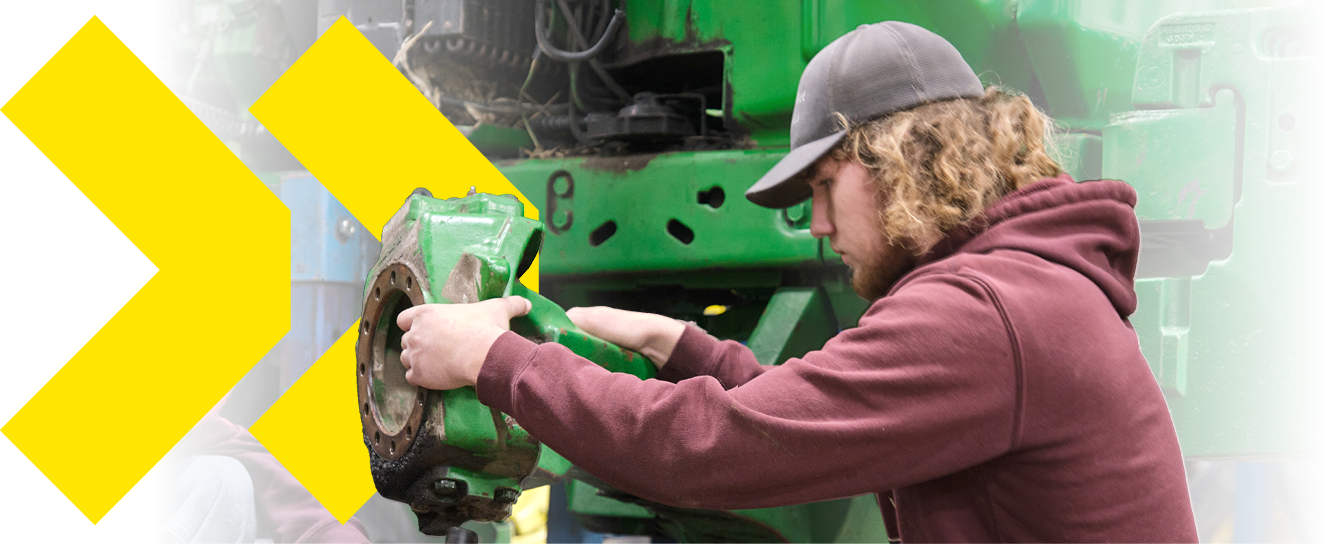
Hands-On
Training
Career-Ready
Day One
Transfer data to Iowa Regent Universities

First Year University GPA
Note: This is the average of transfer with associates and transfer, no associates
2.94
Average Retention One Year After Transferring to a Regent University
86%
Average University Graduation Rates Three Years After Entry to a Regent University
58%

START YOUR LAKER JOURNEY IN 4 STEPS!


Questions? Let's Talk
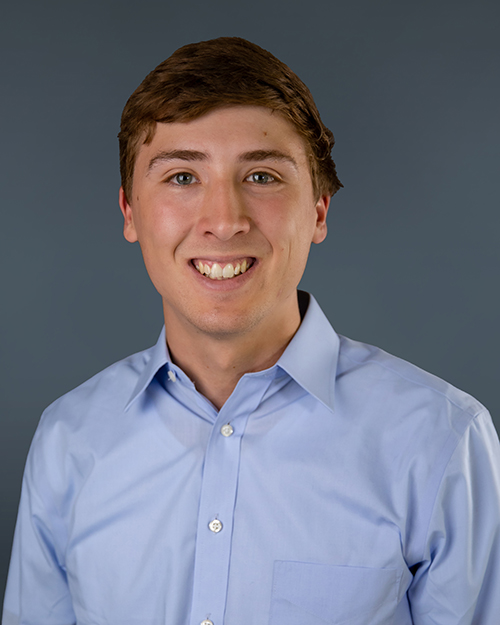 |
Trevor Friesner Academic Advisor 712-362-7984 | tfriesner@iowalakes.edu |