

Explore Society and Build a Meaningful Career
The study of sociology offers profound insights into cultural dynamics, social interactions, and human behavior, paving the way for a fulfilling and impactful career. Whether you aspire to become a police officer, family support worker, probation officer, substance abuse counselor, or social researcher, the Sociology Transfer Major degree at Iowa Lakes provides the foundation you need to succeed.
Earn your Sociology Transfer Major degree at Iowa Lakes and prepare for a seamless transfer to Iowa’s regent universities, including the University of Northern Iowa, the University of Iowa, and Iowa State University. Our program meets general education requirements while allowing you to explore introductory sociology courses like Social Psychology, Social Problems, and Marriage and Family.
By completing this degree, your transfer major will be recorded on your transcripts, ensuring a smooth transition into a bachelor’s degree program in sociology or related fields. Since transfer requirements may vary, our dedicated advisors will guide you in selecting the right courses to match the requirements of your chosen university.
Explore career opportunities and salary expectations in sociology-related fields through the U.S. Department of Labor’s Occupational Outlook Handbook. Ready to take the next step? Connect with an enrollment coach today and begin your journey toward a career in sociology!

Find Your It!
Your Path to a Career in Sociology
A Degree with Real-World Impact
A Sociology Transfer Major degree opens doors to careers in law enforcement, social work, research, human resources, and public policy. Whether you’re interested in advocating for social justice, studying human behavior, or working in community outreach, Iowa Lakes provides the foundational knowledge and analytical skills needed for success.
Seamless Transfer to a Four-Year University
Completing your Associate in Arts degree at Iowa Lakes ensures that your coursework meets your chosen transfer institution’s general education and major-specific requirements. Since each university has unique pathways, our advisors will help you create a personalized transfer plan.
Program Details
Length

4 terms
Degree
Associate in Arts (64 credits)
Campus
ALL Campuses
Additional Information
Term 1
CSC 110 – Intro to Computers
CSC-110 is an introductory course that surveys a variety of topics to include history, hardware, software, terminology, communications, computer ethics, and societal impact of computers. In addition to computer literacy, students will complete hands-on modules using operating systems, word processing, database, presentation, and spreadsheet software; such as Microsoft Office programs.
ENG 105 – Composition I
Emphasis on expository and argumentative writings including a review of usage and mechanics.
Prerequisites: Satisfactory score on the ACT, Accuplacer, ASSET, COMPASS as determined by Iowa Lakes policy
POL 111 – American National Government†
Review of basic fundamentals of government including federalism, the political process, the presidency, the congress and the judicial system.
SDV 103 – Successful Learning
Students master the academic and personal skills needed to succeed in higher education and in life. Content will cover academic, communication and life management skills. Goal setting, time management, note taking, test taking and how to be a lifelong learner will also be covered.
Term 2
ENG 106 – Composition II
Continuation of ENG 105 with emphasis on research and documentation as well as literary analysis.
Prerequisites: ENG 105 – Composition I
MAT 157 – Statistics
This course provides a foundation of statistical concepts and procedures that can aid the student as both a consumer and producer of statistical information. The course emphasizes descriptive and inferential statistical methods, probability, estimation, hypothesis testing and linear regression. Students are also introduced to software as it applies to introductory statistical methods.
Prerequisites: Appropriate placement score or MAT 110, MAT 140, MAT 120, MAT 121, MAT 127 or MAT 210
MAT 156 – Statistics
This course provides a foundation of statistical concepts and procedures that can aid the student as both a consumer and producer of statistical information. The course emphasizes descriptive and inferential statistical methods, probability, estimation, hypothesis testing and linear regression. Students are introduced to technology as it applies to introductory statistical methods.
Prerequisites: appropriate placement score or MAT 110, MAT 140, MAT 120, MAT 121, MAT 127 or MAT 210
SOC 110 – Intro to Sociology†
A survey course applying basic sociological concepts, theories, and methods to examine society, culture, cultural institutions, cultural diversity, and cultural stability and change.
SOC 115 – Social Problems†
Acquaints students with theoretical, methodological, and substantive issues in the sociological study of social problems. It examines a variety of social problems in terms of issues in the definition of social problems, difficulties in the measurement of the extent of social problems, contributions that have been made to explaining various aspects of social problems, and the implications of this knowledge for intervention (alleviation or treatment) or prevention of social problems. The course offers examples of social problems, such as racism, environmental decay, sexism, crime and delinquency, and child abuse.
SPC 101 – Fundamentals of Oral Communication†
The fundamentals course develops the basic skills involved in a variety of communication situations, including oral presentations and interpersonal speaking. Emphasis is placed on organization, audience analysis, vocal and physical delivery, listening, nonverbal communication, critical thinking, and methods of dealing with communication apprehension through class discussion and activities.
SPC 112 – Public Speaking
This course examines both the theoretical and practical basis of speech communication, particularly public speaking. Emphasis is placed on speech preparation, organization, support, delivery, and audience analysis.
SPC 122 – Interpersonal Communications
Examines how humans communicate in one-on-one situations through personal and professional relationships.
Choose MAT 157 or MAT 156
Choose SPC 101, SPC 112 or SPC 122
Term 3
PSY 251 – Social Psychology
The study of interpersonal relations, social attitudes, group dynamics, inter-group relations, class and cultural influences in a psychological context.
SOC 120 – Marriage and Family†
The sociological study of the family and family-related issues in cultural, cross-cultural, historical, and social context.
General Education & Program Learning Outcomes
By obtaining an Associate in Arts (AA) degree from Iowa Lakes, you will learn the following:1
Communications:
- Students are able to communicate clearly, both written and oral using the correct medium.
- Students are able to support ideas with appropriate and adequate information.
Sciences:
- Demonstrate safe laboratory practices.
- Apply scientific inquiry/scientific method to answer questions about the natural world.
Mathematics:
- Apply mathematical methods to solve real world problems.
- Evaluate the validity of mathematical solutions.
Social Sciences:
- Students will demonstrate critical thinking skills in written and oral communication.
- Students will critique the diversity of human experience, individually and collectively.
Humanities:
- Respond critically using established aesthetic principles or criteria, or an ethical judgement of specific examples as it relates to the discipline.
- Express the principles of the discipline within the global community by using the language, syntax, and cultural context of the discipline appropriately.
Computers:
- Integrate the technology necessary in the workplace environment.
- Demonstrate knowledge in utilizing software application tools.
1The What You’ll Learn section of our website provides a description of Learning Outcomes for students who successfully complete all requirements for obtaining an Associate in Arts degree from Iowa Lakes Community College.
Hands-On
Training
Career-Ready
Day One
Transfer data to Iowa Regent Universities

First Year University GPA
Note: This is the average of transfer with associates and transfer, no associates
2.94
Average Retention One Year After Transferring to a Regent University
86%
Average University Graduation Rates Three Years After Entry to a Regent University
58%

START YOUR LAKER JOURNEY IN 4 STEPS!




Questions? Let's Talk
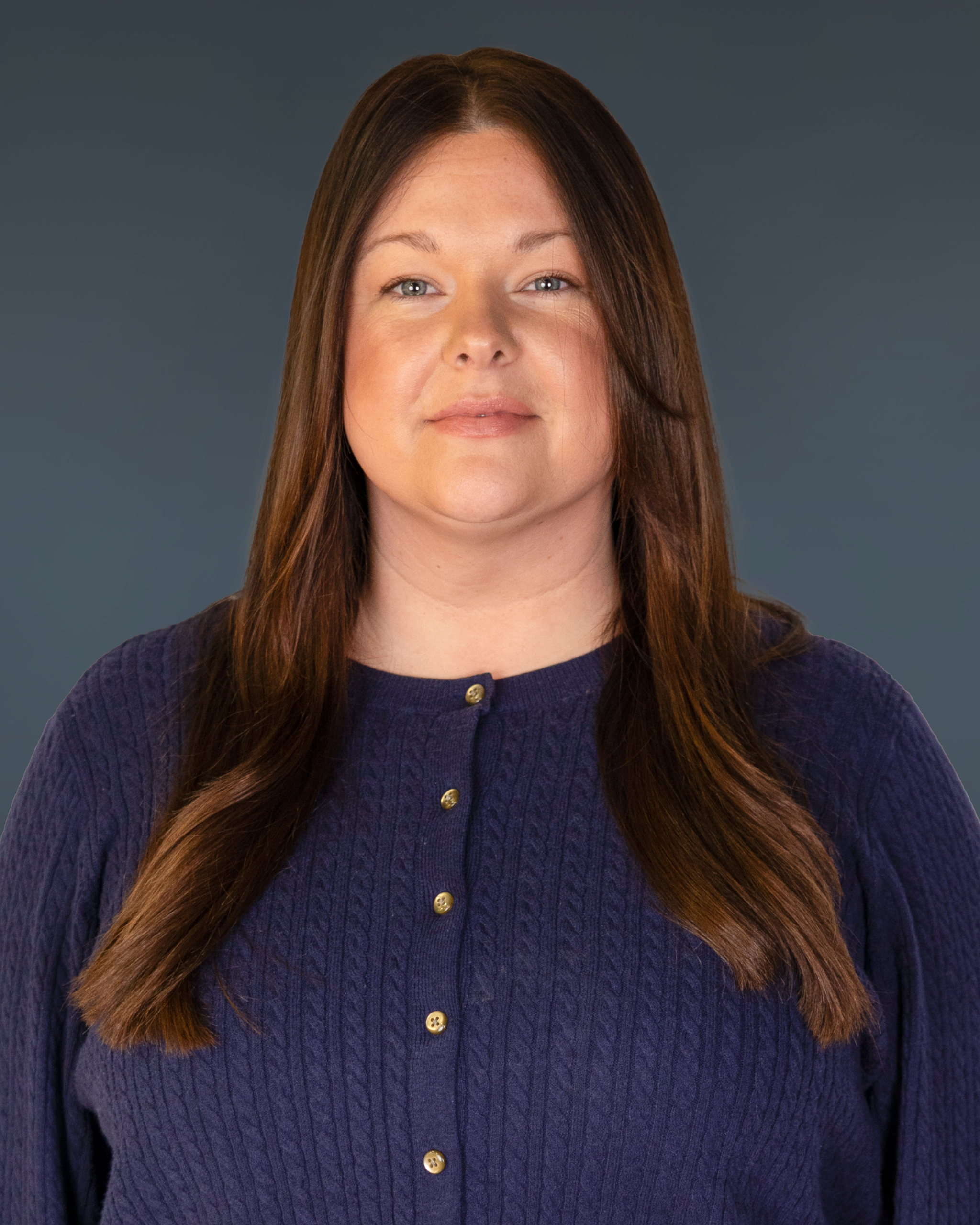 |
Tiffany A. Nolta Academic Advisor 712-362-6833 | tnolta@iowalakes.edu |