


Turn Your Passion for Animal Care into a Career
At Iowa Lakes, our Veterinary Technician AAS degree program provides hands-on training and real-world experience to prepare you for a successful career in veterinary medicine. Veterinary technicians play a critical role in animal healthcare, assisting veterinarians in medical procedures, laboratory testing, and client communication.
Beyond classroom learning, students gain valuable field experience through internship opportunities with veterinary clinics, animal hospitals, and research facilities.
Veterinary Technician AAS Degree Program On-site Clinic
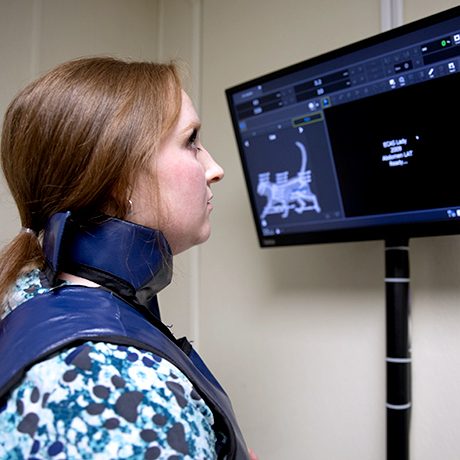
The on-site animal clinic allows students to practice essential skills in:
- Lab testing and diagnostics
- Radiology procedures
- Surgical assisting and anesthesia monitoring
- Animal nursing and patient care
This fully American Veterinary Medical Association (AVMA)-accredited program prepares you to take the Veterinary Technician National Exam (VTNE) and the Iowa Veterinary Technician State Exam, ensuring you meet industry standards and are ready for employment in animal hospitals, research labs, zoos, and beyond.
Explore career opportunities for veterinary technicians through the U.S. Department of Labor’s Occupational Outlook Handbook.
Ready to start your journey? Connect with an enrollment coach today and begin your career in veterinary medicine!

Find Your It!
Program Acceptance
From the moment you step into our program, you’ll be immersed in real-world scenarios. Our state-of-the-art on-site animal clinic provides a dynamic environment for you to gain essential practical skills. Whether it’s conducting lab tests, performing radiology procedures, or assisting with surgeries, you’ll be involved in every stage of animal care. You’ll also participate in internships that place you in real veterinary practices, allowing you to apply what you’ve learned and further develop your confidence and abilities.
Admission Requirements
To be considered for the Veterinary Technician AAS Degree program at Iowa Lakes, applicants must:
- Complete an Iowa Lakes application.
- Graduate from an accredited high school with grades of or better:
- Cumulative GPA of 2.80 or higher or
- HiSET of 45 or higher or GED of 550 higher
- Submit official transcripts (high school and/or college).
- If High School Cumulative GPA is at or above a 3.20, then no additional testing requirements are needed.
- If High School Cumulative GPA is between 2.80 and 3.20, then the following placement tests are required:
- ACCUPLACER Next Generation Writing Skills Score of 250 or higher
- ACCUPLACER Next Generation Reading Score of 245 or higher
- ACCUPLACER Next Generation Algebra (QAS) Score of 250 or higher
or
-
-
- ACT English Score of 17 or higher
- ACT Reading Score of 16 or higher
- ACT Math Score of 19 or higher
-
- Complete prerequisite coursework with a grade of “C” or better, including:
- Introductory College Biology or higher (or one year of high school biology)
- Introduction to College General Chemistry or higher (or one year of high school chemistry)
- College Grades (if applicant has taken college courses from an accredited college)
- Cumulative GPA of 2.8 or higher
- Program Visit
- Complete a Veterinary Job shadow and complete the required observation forms.
- Attend a program orientation if selected for admission (24 students per year).
New Rabies Immunization Requirement
Per AVMA accreditation standards, all students must complete the two-dose pre-exposure rabies vaccination series before starting the program. The requirement follows CDC guidelines for pre-exposure vaccination.
Program Details
Length

5 terms
Degree
Associate in Applied Science (77 credits)
Campus
Emmetsburg
Training
Internship
Additional Information
Term 1
AGV 103 – Introduction to Veterinary Science
This course introduces the basics of animal identification, husbandry, behavior, safety and healthcare. Career opportunities in animal related fields are explored. The student will also complete the American Red Cross Animal First Aid and CPR certification.
AGV 118 – Animal Anatomy & Physiology I
This course provides instruction in anatomy and physiology of domestic animals. The course focus is on skeletal, musculature, renal, ophthalmic, cardiac and respiratory systems. Lab activities focus on skeletal identification and dissection of related body systems of domestic animals.
AGV 119 – Veterinary (Tech) Medical Terminology
Introduction to word parts, directional terminology, and analysis of common veterinary terms.
AGV 150 – Office Procedures for Veterinary Technicians
Includes an overview of veterinary practice management and office procedures, with basic filing, record keeping, telephone etiquette, cash drawer management, and the economics of veterinary practice. Instruction on the use of veterinary practice management computer software is provided.
AGV 189 – Small Animal Clinic Observation
Preparation for and observation at a veterinary practice to focus on small animals, including cats, dogs and other species as available.
AGV 267 – Dosage Calculations for Veterinary Technicians
Dosage Calculations emphasizes the basic math skills and dosage calculations required of Veterinary Technicians . Includes pharmaceutical mathematics with an emphasis on dosage calculations and fluid therapy as related to veterinary medicine.
SPC 101 – Fundamentals of Oral Communication†
The fundamentals course develops the basic skills involved in a variety of communication situations, including oral presentations and interpersonal speaking. Emphasis is placed on organization, audience analysis, vocal and physical delivery, listening, nonverbal communication, critical thinking, and methods of dealing with communication apprehension through class discussion and activities.
Term 2
AGV 112 – Veterinary Tech Anatomy & Physiology II
This course provides instruction in anatomy and physiology of domestic animals. The course focus is on digestive, nervous and sensory, endocrine and urinary systems. Lab activities focus on structure identification and dissection of related body systems of domestic animals.
AGV 145 – Animal Nutrition
Animal Nutrition provides instruction regarding essential nutrients and the role of each in an animal’s metabolism. Topics include basic clinical and therapeutic nutrition, pet food analysis, nutritional deficiencies, and toxins. Emphasis is on dogs and cats with an introduction to large anima
AGV 161 – Animal Nursing I
The first of three courses to introduce and practice the fundamentals of animal nursing. Includes animal handling and restraint, patient admission and history, preparation and administration of vaccines and medications, care of hospitalized patients, introduction to radiology, practice management, client relations and sanitation. Limited to Vet Tech students
AGV 167 – Veterinary Clinic Pathology I
Introduction to veterinary clinical pathology with an emphasis on laboratory procedures commonly performed in private practice. Fecal analysis, basic urinalysis and basic hematology are covered. Proper care and maintenance of laboratory equipment is stressed.
AGV 183 – Large Animal Clinic Observation
Preparation for and observation at a veterinary practice to focus on large animals, including cattle, horses, sheep and swine.
MAT 110 – Math for Liberal Arts
This is a general survey course which includes sets; number systems; elementary algebra; exponents; equations and inequalities; fractions; ratios; proportion and variation; probability and statistics; elementary graphing; consumer mathematics; and an introduction to geometry.
Prerequisites: appropriate placement score or MAT 054 – Math Strategies
Term 3
BUS 161 – Human Relations†
Students are given the opportunity to apply human relations concepts and evaluate experience and observations. Social skills required in various occupational settings will be developed, emphasizing how appropriate personal attitudes lead to social and business success.
AGV 932 – Internship
This course requires an employment experience at a veterinary practice or clinic of at least 320 contact hours. A training sponsor at the employment site will provide supervision, in cooperation with the college instructor. Students will gain hands-on experience and demonstrate knowledge and skills developed in the classroom.
Term 4
AGC 210 – Employment Seminar
Preparation of the farm management student for entry into the non-family farm job market.
AGV 158 – Veterinary Law & Ethics
Discusses moral, ethical and legal principles applicable to veterinarians and their employees, breeders, kennel operators, pet groomers and other allied to the small animal industry. Considers state, local and federal regulations relating to the industry. Effective client relations and telephone courtesy skills are also stressed.
AGV 162 – Animal Nursing II
This course is a continuation of Animal Nursing I. Covers foundation material in pre- and post-surgical care, surgical assisting, fluid therapy, dental prophylaxis, anesthesiology, and basic nursing skills. Clinic and hospital record keeping are covered with an introduction to practical radiology.
Prerequisites: AGV 161 – Animal Nursing I
AGV 168 – Veterinary Clinic Pathology II
Basic clinical pathology laboratory procedures including specimen collection and preservation, hematology, and fecal exam preparation. Hematology will include preparation and performance of PCV, Hb, WBC, RBC counts, preparation and staining blood smears, and performance of differential cell counts. Limited to Vet Tech students.
Prerequisites: AGV 167 – Veterinary Clinic Pathology I
AGV 170 – Veterinary Anesthesiology
This course involves the study of pharmacology, application of anesthetic agents, the physiological effects and means of monitoring them, principles and administration of inhalant anesthetics, and a broad overview of anesthetic protocol and care. Emphasis will be on anesthetic practical skills and anesthesia equipment.
Prerequisites: AGV 161 – Animal Nursing I and AGV 167 – Veterinary Clinic Pathology I
ENG 105 – Composition I
Emphasis on expository and argumentative writings including a review of usage and mechanics.
Prerequisites: Satisfactory score on the ACT, Accuplacer, ASSET, COMPASS as determined by Iowa Lakes policy
Term 5
AGV 140 – Veterinary Pharmacology
This course covers the study of drugs and other pharmaceuticals used in veterinary medicine. Emphasis will be on drug usage, client education, calculations, measurement, administration, inventory, and storage. This course will give a detailed outline of the technician’s role and responsibility in the pharmacy.
AGV 177 – Animal Nursing III
This course is a continuation of Animal Nursing II. Emphasis is on radiology, dentistry, emergency care, record keeping, anesthesiology and surgical assistance.
Prerequisites: AGV 162 – Animal Nursing II
AGV 187 – Veterinary (Tech) Computer Apps
This course re-introduces the student to computer software commonly used in veterinary practice. Students will become proficient in the use of Microsoft Office software and software used in the routine management of veterinary records.
Prerequisites: AGV 150 – Office Procedures for Veterinary Technicians
AGV 188 – Veterinary Clinic Pathology III
Refinement of hematology and other skills acquired in Veterinary Clinical Pathology II. Additional units include urinalysis, electrocardiography, necropsy, cytology, parasitology and specialized clinical procedures.
Prerequisites: AGV 168 – Veterinary Clinic Pathology II
AGV 239 – VTNE Review and Preparation
This course will help students review material from the Veterinary Technician Program and prepare to take the Veterinary Technician National Exam. Emphasis will be placed on the domains of the VTNE. VTNE sample questions will be utilized for student practice.
Prerequisites: AGV 168 – Veterinary Clinic Pathology II, AGV 162 – Animal Nursing II
General Education & Program Learning Outcomes
In the Veterinary Technician program at Iowa Lakes, you will learn how to:1
- Demonstrate collaborative skills as a member of the veterinary healthcare team.
- Employ industry standard office and hospital management procedures.
- Apply pharmacologic principles and procedures in veterinary practice.
- Perform surgical preparation, anesthesia and assistance in veterinary surgery and hospital treatment.
- Perform food animal, equine and companion animal inpatient and outpatient nursing.
- Obtain laboratory samples and perform veterinary clinical laboratory procedures on those samples.
- Perform diagnostic medical imaging.
- Uphold applicable laws, ethical codes and Occupational Safety and Health Administration safety requirements within the profession of veterinary technology.
1The What You’ll Learn section of our website provides a description of Learning Outcomes for students who successfully complete all requirements for obtaining a Veterinary Technician Associate in Applied Science degree from Iowa Lakes Community College.
Iowa Lakes Veterinary Technician program is a fully American Veterinary Medical Association (AVMA)-accredited program through 2029.
Licensure and Certification Disclosure Requirements by State:
Graduation from Iowa Lakes Community College qualifies students to sit for the VTNE (Vet Tech National Exam), which is required to work in all 50 states.
The Veterinary Technician program is accredited by the AVMA Center for Veterinary Medical Accreditation.
Graduation Rates & Job Placement Rates
| Year | Number of Students | Graduation Rate | Job Placement Rate |
| 2023 | 11 | 100% | 90.9% |
| 2024 | 12 | 91.7% | 100% |
| 2025 | 14 | 71.4% | 90% |
VTNE Pass Rates – 3-year rolling average first-time test takers within 1 year of graduation
2023 – 2025
| Number of 1st Time Test Takers | 24 |
| Pass | 11 |
| Fail | 13 |
| Pass Average | 45.83% |
Job Placement & Internship Opportunities
Strong Job Placement Rates & Career Readiness
Graduates of the Veterinary Technician, AAS degree at Iowa Lakes are well-prepared for immediate employment in the animal healthcare industry. With a high job placement rate, many students secure full-time positions before graduation through internship connections and clinical experiences.
Our graduates go on to work in:
- Veterinary clinics and hospitals (small and large animal practices)
- Animal shelters and rescue organizations
- Zoos and wildlife rehabilitation centers
- Biomedical research laboratories
- Specialty and emergency animal hospitals
Real-World Internship Experiences
All Veterinary Technician students complete hands-on internships with veterinary professionals, providing valuable industry experience before entering the workforce. Internships help students:
- Work alongside licensed veterinarians and veterinary technicians
- Gain experience in surgical assisting, radiology, and emergency care
- Learn best practices in client communication and patient care
- Develop specialized skills in areas like dentistry, anesthesia, and laboratory diagnostics
Many students receive job offers from their internship sites, making this real-world experience a critical step toward securing employment in veterinary medicine.
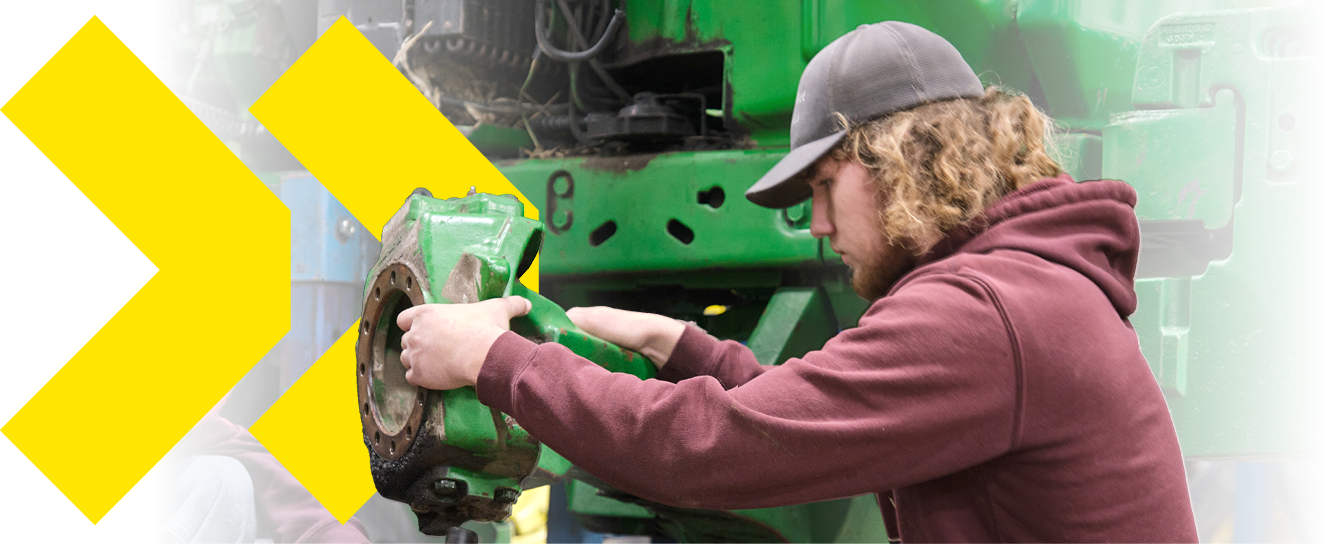
Hands-On
Training
Career-Ready
Day One
Opportunities, Earnings & Growth

Projected Employment Growth
.7%
Potential Careers
Veterinary Technologist and Technician, Veterinary Assistant, Laboratory Animal Caretaker, Livestock Health Management, Military, Biomedical Research, Zoo or Wildlife Medicine
Projected Earnings
Iowa Workforce
$41,537
Average Salary
US Bureau of Labor
$44,040
Average Salary

START YOUR LAKER JOURNEY IN 4 STEPS!




Questions? Let's Talk
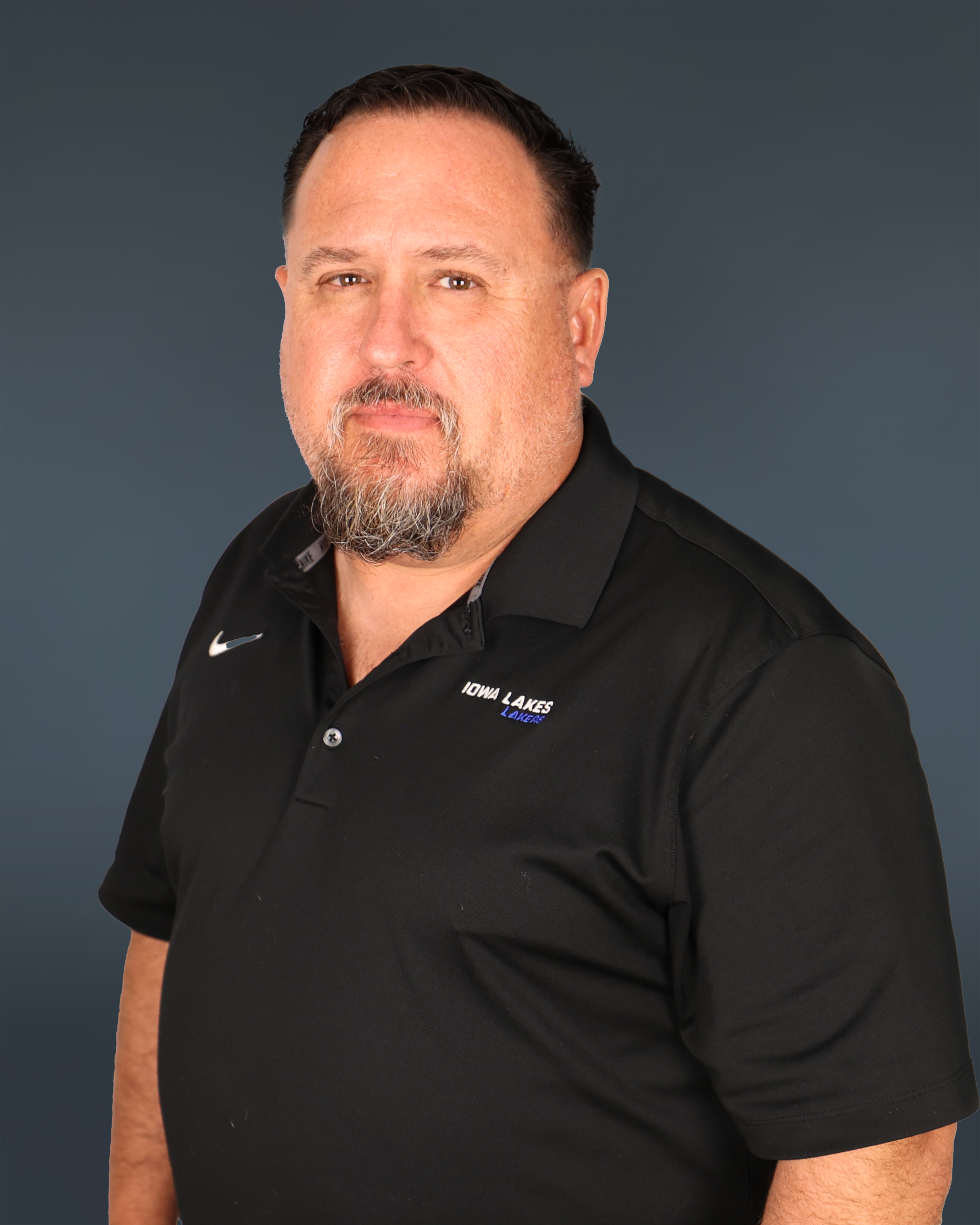 |
Dr. Thomas Beall Veterinary Technician Program Coordinator & Assistant Professor 712-852-5332 | tbeall@iowalakes.edu |