

Your Future in Accounting Starts Here
Find your Perfect Fit in the World of Numbers and Data with an Accounting Degree
Do you enjoy working with numbers, organizing data, and communicating with people? A career in accounting might be the perfect match for your skills and interests. At Iowa Lakes, you can pursue the Certified Professional Bookkeeper Certificate, the Accounting Diploma, or the Accounting Specialist, AAS degree—all designed to prepare you for success in this dynamic field.
Why Choose the Accounting Specialist, AAS degree at Iowa Lakes?
- Learn Something New Every Day: Gain a comprehensive understanding of the basic principles of accounting while exploring diverse specialties such as public, private, governmental, or nonprofit accounting.
- Real-World Experience: Apply your knowledge through hands-on learning, practical coursework, and internships or practicums.
- Recession-Proof Career: Enter a stimulating and ever-evolving field with a consistent demand for skilled professionals.
- Flexible Pathways: Choose from certificates, diplomas, and degrees to align your education with your career goals.
- Practical Preparation: Develop expertise in payroll, financial management, income tax accounting, and cost accounting.
With the Accounting Specialist, AAS degree at Iowa Lakes, your education extends beyond the classroom. Through interactive labs, advanced software training, and a practicum or field experience, you’ll gain real-world expertise that employers value. By mastering essential tools like QuickBooks, Microsoft Office Applications, and specialized accounting software, you’ll be ready to hit the ground running in your career.
Explore career opportunities and salary projections through the U.S. Bureau of Labor Statistics Accountants & Auditors Outlook.

Find Your It!

An Accounting Program Designed for Success
The Accounting Specialist program at Iowa Lakes offers a flexible format that accommodates both on-campus and online learners, ensuring that you can tailor your education to fit your lifestyle. Plus, with small class sizes and dedicated faculty, you’ll receive the personalized support needed to excel academically and professionally.
Certification Opportunities
Prepare for the Certified Bookkeeper Exam to earn credentials that boost your employability and demonstrate your expertise. With a certification from the American Institute of Professional Bookkeepers (AIPB), you’ll stand out in a competitive job market.
Take control of your future and find your place in this high-demand, recession-resistant career path.
Iowa Lakes is here to help you Get to IT!
Program Details
Length

4 terms
Degree
Associate in Applied Science (62 credits)
Campus
Algona, Emmetsburg, Estherville, Spencer, Spirit Lake & Online
Training
Internship
Your Career Pathway: Additional Degree & Certificate Options
Additional Information
Term 1
ACC 131 – Principles of Accounting I
The course examines the accounting methods, principles and terminology needed in the preparation and analysis of financial statements. Included is a study of partnership accounting.
ACC 161 – Payroll Accounting
This introductory course covers the processes of completing payroll records and implementing payroll procedures. Topics include methods of computing compensation, state and federal laws affecting payroll, mandatory and voluntary payroll deductions, methods of keeping records, and preparation of internal and governmental reports.
CSC 110 – Intro to Computers
CSC-110 is an introductory course that surveys a variety of topics to include history, hardware, software, terminology, communications, computer ethics, and societal impact of computers. In addition to computer literacy, students will complete hands-on modules using operating systems, word processing, database, presentation, and spreadsheet software; such as Microsoft Office programs.
ENG 105 – Composition I
Emphasis on expository and argumentative writings including a review of usage and mechanics.
Prerequisites: Satisfactory score on the ACT, Accuplacer, ASSET, COMPASS as determined by Iowa Lakes policy
MAT 110 – Math for Liberal Arts
This is a general survey course which includes sets; number systems; elementary algebra; exponents; equations and inequalities; fractions; ratios; proportion and variation; probability and statistics; elementary graphing; consumer mathematics; and an introduction to geometry.
Prerequisites: appropriate placement score or MAT 054 – Math Strategies
Term 2
ACC 132 – Principles of Accounting II
Continuation of ACC 131, covering corporate accounting, long-term debts, financial analysis, managerial accounting and budgeting concepts.
Prerequisites: ACC 131 – Principles of Accounting I
ACC 311 – Computer Accounting
This course is designed to provide hands-on approach to learning how modern computerized accounting systems function. This application includes the following: general ledger, accounts payable, accounts receivable, bank reconciliation, budgeting, purchase order processing and inventory, sales order processing and inventory, fixed assets, and payroll.
ACC 360 – Accounting Spreadsheets
This course provides the student with an in-depth working knowledge of using an integrated spreadsheet program to assist in routine jobs. Writing formulas is emphasized, along with planning and creating spreadsheets
BCA 218 – Adv Microsoft Office Apps
Provide students with broad understanding of management information systems in the business environment. Offers more detailed hands-on uses of application programs such as word processing, database management and spreadsheets in preparation for careers in business.
Prerequisites: CSC 110 – Intro to Computers, CSC 116 – Information Computing or BCA 212 – Intro to Comp Business Apps
SPC 101 – Fundamentals of Oral Communication†
The fundamentals course develops the basic skills involved in a variety of communication situations, including oral presentations and interpersonal speaking. Emphasis is placed on organization, audience analysis, vocal and physical delivery, listening, nonverbal communication, critical thinking, and methods of dealing with communication apprehension through class discussion and activities.
Term 3
ACC 221 – Cost Accounting
This course develops an understanding of accounting methods for manufacturing and service enterprises. Included are analysis techniques for management’s use of accounting data to aid in product costing, performance measuring, budgeting and other operating decision.
Prerequisites: ACC 132 – Principles of Accounting II
ACC 231 – Intermediate Accounting I
The course reviews accounting procedures and reporting processes, including an in-depth analysis of generally applied accounting principles. Topics include the income statement, balance sheet, revenue recognition, cash and marketable securities, inventory, depreciation, cash flows, and notes and accounts receivable.
Prerequisites: ACC 132 – Principles of Accounting II
BUS 185 – Business Law I
Business Law 1 is an introduction to Business Law in the areas of legal environment of business, contract law, contracts for the sale of goods (UCC) and real and personal property law.
ECN 120 – Principles of Macroeconomics
Reviews national income and output; employment and prices; money and credit; government finance; monetary and fiscal policy; economic growth and development; and international finance.
ECN 130 – Principles of Microeconomics
Reviews the organization and workings of modern economic systems; the role of markets, prices and competition in the promotion of economic welfare, alternative systems and international trade.
FIN 130 – Principles of Finance
An examination of the tools and techniques used in financial decision-making and planning, analysis and evaluation, and capital and asset management. Principles of Finance introduces students to concepts such as cash flow, financial forecasting, asset valuation, bond and stock valuation, the cost of capital, capital budgeting, time value of money, risk analysis, return on investment as applied to business situations.
Choose either ECN 120 or ECN 130
Term 4
ACC 232 – Intermediate Accounting II
The course is a continuation of ACC 231, including an in-depth analysis of the theory and practice of financial accounting for liabilities and equity. Other topics include earnings per share, deferred taxes, pension, leases, accounting changes, error corrections and cash flow.
Prerequisites: ACC 231 – Intermediate Accounting I
ACC 261 – Income Tax Accounting
Introduces the general theory and procedures pertaining to state and federal taxation. Studies application of laws as they pertain to income of individuals and sole proprietorships, gifts, estates and Social Security.
BUS 175 – Business Seminar I
Introduces business and accounting students to career opportunities in the business world. The course includes methods of networking and the processes needed to successfully begin a career.
MGT 101 – Principles of Management†
Principles of Management provides the student with a conceptual framework for understanding the basic theories of management. Emphasis is placed on the internal and external environment, ethics, planning, goal setting, decision making, organizational structure, motivation and group dynamics, and effective control mechanisms for establishing and accomplishing business objectives.
WBL 205 – Practicum/Field Exp: Business, Finance, Marketing & Management
Offered under the guidance of an instructor and employer/mentor/supervisor, this course provides students an opportunity to learn in a work setting while obtaining practical experience in Business, Finance, Marketing, and Management careers. Students will participate in job training and will complete assignments to develop workplace communication skills, gain an understanding of industry and organizational structures, and learn problem-solving skills in a work environment.
ACC 702 – Certified Bookkeeper Review
The course is designed to prepare students for successful completion of the Certified Bookkeeper National Certification Examination. Included in the course is a review of adjusting entries, correction of accounting errors, payroll accounting, depreciation, inventory, and internal controls and fraud prevention.
Prerequisites: ACC 131 – Principles of Accounting I
Choose either WBL 205 or ACC 702
General Education & Program Learning Outcomes
In the Accounting Specialist program at Iowa Lakes, you will learn the following:1
1. Apply Generally Accepted Accounting Principles (GAAP) in accounting for sole proprietorships, partnerships, and corporations.
2. Perform all required steps in the accounting cycle, including the preparation of financial statements.
3. Perform specialized payroll accounting procedures.
4. Apply cost accounting procedures to manufacturing entities.
5. Prepare federal income tax forms for individuals and businesses.
6. Perform word processing, spreadsheet, database, presentation, and accounting applications.
7. Recognize economic forces and monetary and fiscal policy, both domestically and globally.
8. Demonstrate proficiency in utilizing accounting computer software programs.
9. Apply appropriate judgment derived from knowledge of accounting theory to financial analysis and decision making.
10. Understand legal, ethical, and social issues related to business solutions.
1The What You’ll Learn section of our website provides a description of Learning Outcomes for students who successfully complete all requirements for obtaining an Accounting Specialist Associate in Applied Science degree from Iowa Lakes Community College.
Special Certifications: American Institute of Professional Bookkeepers (AIPB) Certification

Hands-On
Training
Career-Ready
Day One
Opportunities, Earnings & Growth

Projected Employment Growth
.3%
Potential Careers
Staff Accountant, Cost Accountant, Payroll Accountant, Accounts Receivable, Accounts Payable, Office Manager, Billing Specialist, Inventory Clerk
Projected Earnings
Iowa Workforce
$77,272
Average Salary
US Bureau of Labor
$90,780
Average Salary

START YOUR LAKER JOURNEY IN 4 STEPS!




Questions? Let's Talk
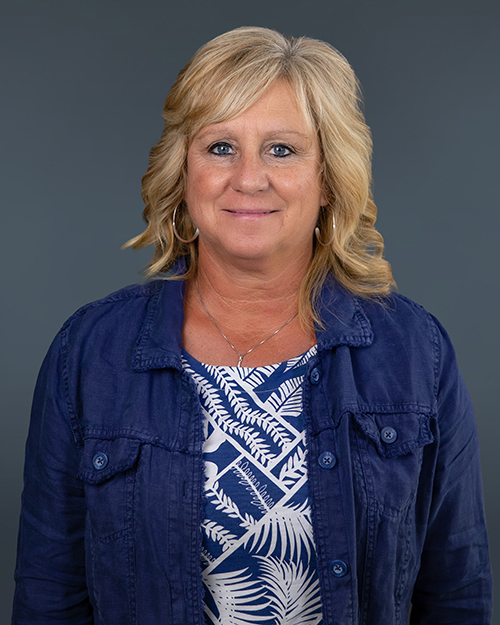 |
Sheila Drenkow Accounting Professor/Coordinator 712-362-8399 | sdrenkow@iowalakes.edu |