
Fuel Your Passion with a Powersports & Power Equipment AAS Degree
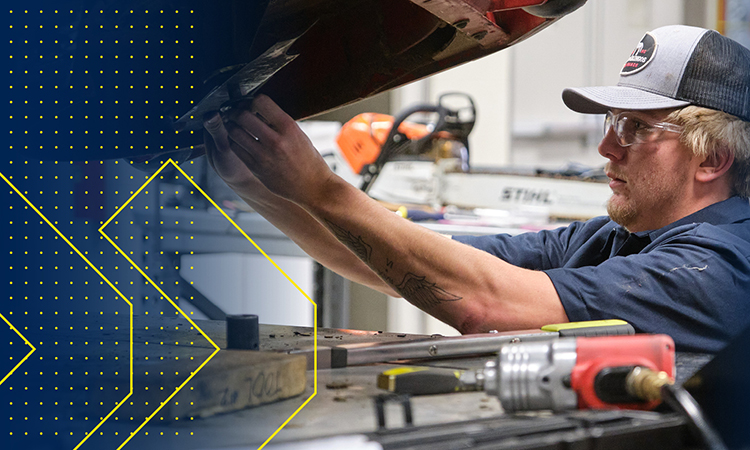
Turn your love for powersports and outdoor equipment into a high-demand career with the Powersports & Power Equipment Technology AAS Degree from Iowa Lakes. This two-year program provides hands-on training in diagnosing, repairing, and maintaining motorcycles, ATVs, UTVs, snowmobiles, lawn equipment, and small engines—preparing you for a fast-paced career in dealerships, service centers, and performance shops.
At Iowa Lakes, you’ll train with the latest diagnostic tools and repair equipment, learning fuel systems, engine performance, electrical troubleshooting, and computerized control systems. The program is backed by industry-leading manufacturers such as Briggs and Stratton, Stihl, Honda Engines, and Polaris, ensuring you receive up-to-date training in cutting-edge technology. With hands-on labs, real-world service experience, and certification opportunities, you’ll graduate job-ready with specialized skills that set you apart.
Gain Real-World Experience in Powersports & Outdoor Equipment Repair
The Powersports & Power Equipment Technology AAS program provides comprehensive training in maintaining and repairing small engines and power-driven vehicles. Key learning areas include:
- Motorcycle and ATV repair – Two- and four-stroke engine servicing
- Snowmobile diagnostics and performance tuning
- Lawnmower, chainsaw, and generator maintenance
- Fuel injection systems, carburetors, and emissions
- Electrical systems and computerized diagnostics
Explore career opportunities and wage potential through the U.S. Bureau of Labor Statistics Small Engine Mechanics Outlook. Ready to kickstart your career? Connect with an enrollment coach today and take the next step toward an exciting future in power sports technology!

Find Your It!
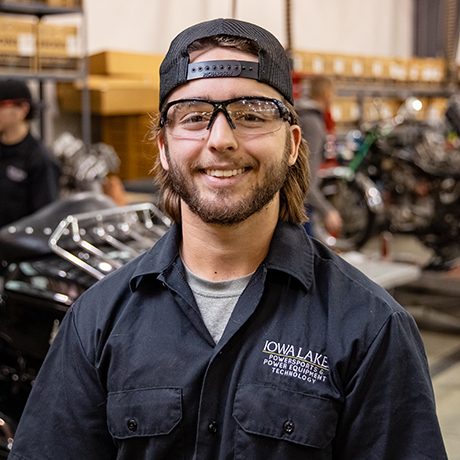
Hands-On Training & Certification Opportunities
Real-World Learning Through Industry Partnerships
Iowa Lakes students gain on-the-job experience through strong industry connections through internships and cooperative work programs, ensuring they graduate with valuable industry experience. Thanks to the program’s partnerships with leading dealerships, repair shops, and equipment manufacturers, many students secure job placements before completing the program.
Multiple Career Pathways & Advancement Opportunities
Graduates of the Powersports & Power Equipment Technology AAS program are prepared for careers as:
- Powersports technicians in dealerships, repair shops, and equipment rental centers
- Service managers and performance specialists
- Power equipment technicians for commercial and residential equipment
- Business owners and independent repair professionals
With the continued rise in recreational vehicle use and outdoor equipment sales, demand for skilled power sports technicians is stronger than ever. Whether your passion is motorcycles, ATVs, or high-performance tuning, Iowa Lakes gives you the technical skills, hands-on experience, and industry certifications to launch a high-energy, in-demand career.
Program Details
Length

5 terms
Degree
Associate in Applied Science (76 credits)
Campus
Emmetsburg
Training
Internship/Practicum
Your Career Pathway: Additional Degree & Certificate Options
Additional Information
Term 1
COM 723 – Workplace Communications†
Developing skills in reading, writing and listening as they apply to students’ vocational needs.
MOT 121 – Small Engines Theory
Basic two- and four-stroke engine theory, design, and construction. All basic systems are studied, as well as troubleshooting, failure analysis, and repair procedures. Service literature, warranties, and engine identification are covered.
MOT 122 – Small Engines Lab
Complete disassembly and reassembly of modern engines, troubleshooting, failure analysis, and proper repair techniques. Hands-on testing and inspection of engine systems.
MOT 151 – Shop Safety & Procedures
Safe shop practices and procedures, including safe equipment operation, proper tool usage, importance of personal protective gear and how to handle emergency situations.
Corequisite: MOT 121 – Small Engine Theory
MOT 153 – Fundamentals of Electricity
Basic electrical theory used in the motorcycle and small engine field. Study of Ohm’s Law, electrical symbols, problem solving, types of circuits, usage of a VOM and other electrical test equipment. Lecture and laboratory.
Corequisites: MSE 143 – Small Engines Theory
ELE 332 – Fundamentals of Electricity
This course provides knowledge of the fundamentals of electricity along with electrical testing procedures and equipment for the transportation and maintenance industry.
Corequisites: AGM 332 – Fund. of Electricity Lab Farm Equipment, AUT 332 – Fund. of Electricity Lab Automotive, MOT 332 – Fund. of Electricity Lab Powersports or MSE 332 – Fund. of Electricity Lab Marine
MOT 332 – Fundamentals of Electricity Lab Powersports
This course provides application of the fundamentals of electricity along with electrical testing procedures and equipment on powersports and power equipment.
Corequisite: ELE 332 – Fundamentals of Electricity
MOT 155 – Outdoor Power Equipment I
This course is an introduction to the various types of drives and power delivery systems that will be encountered in the outdoor power equipment industry. Construction, operation, maintenance, repair of outdoor power equipment, and other systems including transmissions, clutches, belt drives, chain drives, basic hydraulics, and hydrostatic transmissions. Assembly, disassembly, inspection, and repair of these systems are also covered.
Prerequisite: MOT 121 – Small Engines Theory
WEL 334 – Trade & Industry Welding
Principles and applications of gas and MIG welding theory, safety and shop practices are covered. Lecture and laboratory.
Choose MOT 153 or ELE 332 & MOT 332
Term 2
MAT 772 – Applied Math
A course in elementary mathematical skills for technicians. Topics covered include fundamental operations with whole numbers, fractions, decimals and signed numbers; percents; geometric figures and basic constructions; area and volume formulas; English/Metric systems; measurements; and basic algebraic equations and applications.
MOT 129 – Powersports Engine 2&4 Stroke Lab
This course includes engine disassembly, reassembly, and operation of various power sports engines. Includes general repairs, maintenance, special tool usage, service manual usage, and testing of engines.
Prerequisites: First semester of program
Corequisites: MOT 131 – Powersports Engine 2&4 Stroke
MOT 131 – Powersports Engine 2&4 Stroke
This course includes the construction, design, and theory of operation for power sports engines, both two and four-stroke. Parts identification, correct service procedures, inspection, troubleshooting, and failure analysis will be covered.
MOT 139 – Powersports Fuel Systems
Powersports fuel systems including carburetion, fuel injection, and oil injection. Topics covered will be troubleshooting, testing, adjustments, and disassembly/reassembly. Proper service procedures are discussed, demonstrated, and practiced. Lecture and laboratory.
Prerequisites: First two semesters of program
MOT 144 – Drive Systems/Chassis/Suspension
This course covers the functions, construction, and operation of motorcycle drive systems, chassis, and suspension systems. Their importance in the safe operation and control of a motorcycle is discussed. Disassembly, assembly, troubleshooting, and repair of these components are covered.
Term 3
MOT 146 – Powersports Electrical Systems
Study of the construction, principles of operation, and design of Powersports ignition and electrical systems.
MOT 910 – Cooperative Work Experience
Student is involved in a supervised cooperative work experience in a dealership.
Term 4
BUS 161 – Human Relations†
Students are given the opportunity to apply human relations concepts and evaluate experience and observations. Social skills required in various occupational settings will be developed, emphasizing how appropriate personal attitudes lead to social and business success.
MOT 202 – ATV & UTV Systems
Introduction to ATVs and UTVs and all their systems including steering, suspension, accessories, transmissions, 4×4, and other drive system components. Proper service techniques, troubleshooting, assembly, and disassembly are covered along with a unit on performance work. Lecture and laboratory.
MOT 208 – Powersports Tune-up and Maintenance
This course includes tune-up procedures for power sports machines.
MOT 209 – Dyno Analysis and Fuel System Tuning
This course includes dyno operation, dyno computer usage, data analysis, air-fuel ratio sampling, troubleshooting technique, tuning fuel systems, and computer tuning applications.
MOT 210 – Drivability & Troubleshooting
This course will better prepare the student for real-life drivability and troubleshooting problems that they will encounter in the field.
Term 5
BCA 212 – Intro to Comp Business Apps
In a Windows environment, the focus of this course is to use hardware and software as business productivity tools. Training includes a hands-on introduction to computer applications vital in business and industry . The course covers computer terminology, operating system, email, and Internet applications . Hands on training is provided for software business applications including word processing, spreadsheet, database, and presentation software.
BUS 102 – Intro to Business
The basic fundamentals of business. Basic business and economic concepts and terminology; management, marketing, finance, human resource management, accounting and other business areas.
MOT 220 – Advanced Electrical Diagnostics
This course provides the student with the advanced electrical diagnosis and troubleshooting skills needed to work in the Powersports and Power Equipment industry.
MOT 230 – Advanced Fuel System Diagnostics
This course will prepare the student to better diagnose, troubleshoot, and repair fuel systems. It will also better prepare them to be able to use diagnostic scan tools and computer diagnostic software.
MOT 250 – Outdoor Power Equipment II
This course is the application of fundamental service, repair procedures, and systematic troubleshooting on various types of outdoor power equipment.
MSE 159 – Snowmobile Systems
Snowmobile systems including clutches, suspensions, engines, tracks and other components are studied. Proper service techniques, troubleshooting, assembly and disassembly are covered along with a unit on performance work. Lecture and laboratory.
Prerequisites: MSE 151 or MOT 151 – Shop Safety and Procedures
MSE 183 – Personal Water Craft Systems
Theory and hands-on lab for all systems in personal watercraft including jet pumps, engines and steering systems. Repair, troubleshooting and service procedures are covered. Lecture and laboratory.
Prerequisites: First two semesters of program
General Education & Program Learning Outcomes
In the Powersports & Power Equipment Technology program at Iowa Lakes, you will learn how to:1
- Practice safety in the repair and service of Powersports and Power Equipment systems.
- Identify the operational relationships in Powersports and Power Equipment components and systems.
- Select appropriate tools and equipment for the task being performed.
- Demonstrate effective use of industry related literature to perform repairs.
- Evaluate system performance for repair or replacement.
- Perform preventative maintenance according to recommended service schedules.
- Develop accuracy, proficiency, and quality in tasks performed.
1The What You’ll Learn section of our website provides a description of Learning Outcomes for students who successfully complete all requirements for obtaining a Powersports & Power Equipment Technology Associate in Applied Science degree from Iowa Lakes Community College.
Train with Industry Leaders & Get Certified
Students receive hands-on training with top manufacturers, gaining access to factory-backed certifications and training programs that give them a competitive edge in the job market. Certification opportunities include:
- Polaris Technician Training

Students complete the Polaris Master Service Dealer (MSD) certifications at the Bronze and Silver levels while enrolled in the program at Iowa Lakes.
Special Certifications:
- Polaris
- Indian
- Stihl
- Briggs and Stratton
- Honda Engines
One of the Top 5 Motorcycle Mechanic Schools in the U.S.
Iowa Lakes has been recognized as one of the nation’s top five motorcycle mechanic schools by Best Accredited Colleges, solidifying our reputation as a leader in power sports and motorcycle repair education. This ranking highlights our cutting-edge facilities, hands-on training, and strong industry partnerships, ensuring students receive top-tier education and career preparation.
With a curriculum designed around real-world experience and manufacturer-backed certifications, the Powersports & Power Equipment Technology program at Iowa Lakes equips students with the skills needed to succeed in the fast-growing motorcycle and power sports industry. Whether you’re passionate about motorcycles, ATVs, UTVs, or small engine repair, our program provides the specialized training and industry connections that set graduates apart.
One Of The 5 Best Motorcycle Mechanic Schools in the U.S.
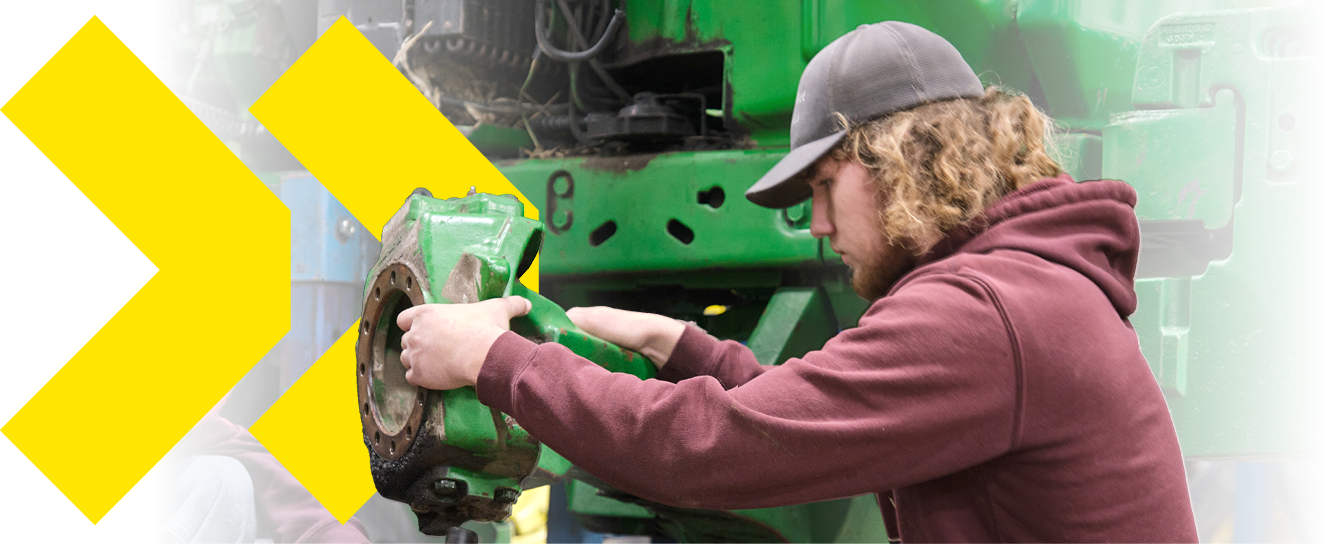
Hands-On
Training
Career-Ready
Day One
Opportunities, Earnings & Growth

Projected Employment Growth
.3%
Potential Careers
Rental Center, Independent Repair Shop, Powersport Dealers, Sales/Parts, Self Employment, Small Engines Dealers, Outdoor Power, Equipment Dealers
Projected Earnings
Iowa Workforce
$43,534
Average Salary
US Bureau of Labor
$48,070
Average Salary

START YOUR LAKER JOURNEY IN 4 STEPS!




Questions? Let's Talk
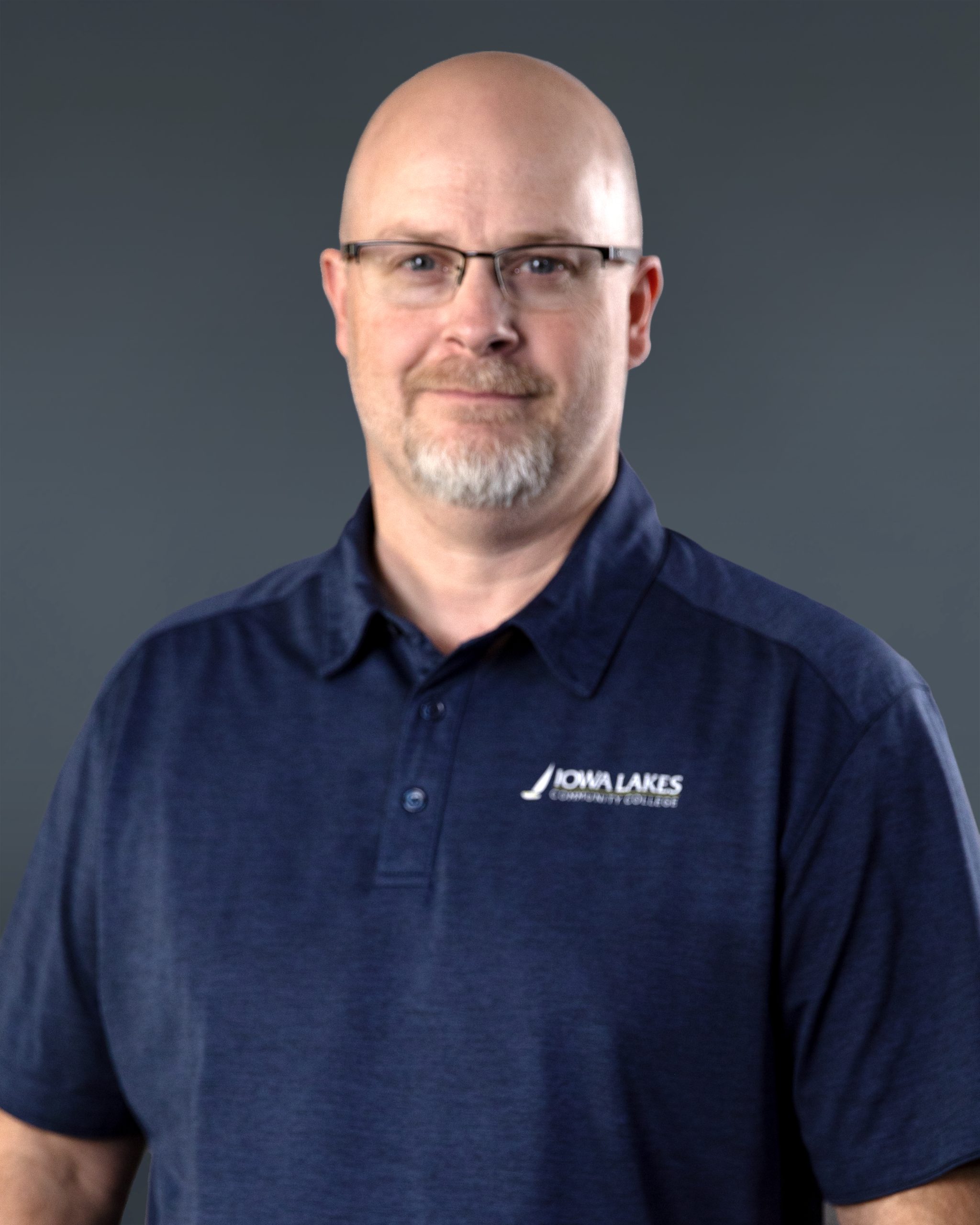 |
Matthew Bohl Assistant Professor | Powersports & Power Equipment Technology 712-852-5230 | mbohl@iowalakes.edu |
 |
Dustin Ross Assistant Professor | Powersports & Power Equipment Technology 712-852-5260 | dross@iowalakes.edu |