


Surgical Technology Program Information
AccrediTATION INFORMAtion
Licensure and Certification Disclosure Requirements by State:
- Iowa Lakes Community College’s Surgical Technology program meets the educational requirements in the following states/jurisdictions: All 50 states.
- Iowa Lakes Community College has not made the determination if the Surgical Technology program meets the state educational requirements for the following states/jurisdictions: Alabama, Alaska, Arizona, California, Connecticut, Delaware, Florida, Georgia, Hawaii, Iowa, Kansas, Kentucky, Louisiana, Maine, Maryland, Michigan, Minnesota, Mississippi, Missouri, Montana, Nebraska, New Hampshire, New Mexico, North Carolina, Ohio, Oklahoma, Rhode Island, South Dakota, Vermont, Washington DC, West Virginia, Wisconsin, and Wyoming.
The Surgical Technology AAS Degree Program, Spencer Campus, is accredited by the Commission on Accreditation of Allied Health Education Programs (www.caahep.org) upon the recommendation of the Accreditation Review Committee on Education in Surgical Technology and Surgical Assisting. (ARCSTSA)
CAAHEP-Accredited Program
The Surgical Technology Program at Iowa Lakes Community College is a CAAHEP-accredited program. Graduates of our program are eligible to sit for the national certification exam offered by the National Board of Surgical Technologists and Surgical Assistants (NBSTSA). Upon passing the exam, they are able to use the credential Certified Surgical Technologist (CST).
In 2020, 100% of our graduates passed the exam offered by the NBSTSA. Also, in 2020, 100% of our students were placed in surgical technology-related jobs following graduation.
I. Observation Role (0)
A. The O role is defined as a student who has not met the FS or SS criteria. The student is observing a case in either the sterile or nonsterile role. Observation cases cannot be applied toward the required 120-case count but must be documented.
II. Case requirements – A student must complete a minimum of 120 cases as delineated below:
A. General surgery
1. A student must complete a minimum of 30 cases in General Surgery.
a. 20 of these cases must be performed in the FS role.
b. The remaining 10 cases may be performed in either the FS or SS role.
B. Specialty surgery.
1. A student must complete a minimum of 90 cases in various surgical specialties, excluding General Surgery.
a. A minimum of 60 cases must be performed in the FS role and distributed amongst a minimum of four surgical specialties.
i. A minimum of ten cases in four different specialties must be completed in the FS role (40 cases total)
ii. The additional 20 cases in the FS role may be distributed amongst any one surgical specialty or multiple surgical specialties.
b. The remaining 30 cases may be performed in any surgical specialty in either the FS or SS role.
2. Surgical specialties (excluding General Surgery)
a. Cardiothoracic
b. Genitourinary
c. Neurologic
d. Obstetric and gynecologic
e. Orthopedic
f. Otorhinolaryngologic
g. Ophthalmologic
h. Oral Maxillofacial
i. Peripheral vascular
j. Plastics and reconstructive
k. Procurement and transplant
2 Programs should contact their accrediting agencies for additional clarification.
www.arcstsa.org
III. Counting cases
A. Cases may be counted according to surgical specialty2 as defined in the core curriculum.
1. One pathology is counted as one procedure.
Example: A patient requires a breast biopsy followed by a mastectomy. It is one pathology, breast cancer, and the specialty is general surgery; therefore, it is counted and documented as one procedure and one case.
2. Counting more than one case on the same patient.
Example: A trauma patient requires a splenectomy and repair of a LeFort I fracture. Two cases can be counted and documented since the splenectomy is a general surgery, and the LeFort I repair is an oral-maxillofacial surgical specialty.
Example: A procedure that requires different setups and includes different specialties may be counted as separate cases. A mastectomy procedure (general surgery) followed by immediate reconstruction or augmentation (plastics and reconstruction) is counted as a separate case.
3. Diagnostic vs. operative endoscopy cases
a. An endoscopy, classified as a semi-critical procedure, is considered a diagnostic case.
b. An endoscopy, classified as a critical procedure, is considered an operative case.
c. Diagnostic and operative cases will be counted according to specialty.
d. Diagnostic cases are counted in the SS role up to a total of ten of the required 120 cases.
Example: A cystoscopy is a diagnostic procedure. If an adjunct procedure is performed, it is considered operative; therefore, a cystoscopy with ureteral stent placement is an operative procedure.
B. Vaginal delivery cases are counted in the SS role of the OB/GYN specialty, up to a total of five of the required 120.
IV. Documentation2*
A. Case performed
B. Role performed
C. Performance evaluations
D. Verification by the program director
*The surgical technology program is required to verify through the surgical rotation documentation the students’ progression in the scrub role in surgical procedures of increased complexity as he/she moves towards entry-level graduate competency.
The Iowa Lakes Community College Surgical Technology Program requires students to possess the physical, sensory, cognitive, communication, and professional abilities necessary to safely participate in classroom, laboratory, simulation, and clinical experiences. These standards identify the essential functions required to meet program outcomes, demonstrate clinical competency, and fulfill the responsibilities of an entry-level surgical technologist. Students must be capable of performing these functions with or without reasonable accommodation. The ability to exercise sound judgment, maintain professional behavior, and provide safe patient care in a fast-paced surgical environment is essential for successful completion of the program.
Students enrolled in the Surgical Technology Program must demonstrate the ability to meet the following technical standards:
Observation and Sensory Abilities
- Observe patients, procedures, and the sterile field accurately.
- Read labels, monitors, documentation, and instrument markings.
- Distinguish colors, shapes, and visual details necessary for patient safety.
- Hear and respond appropriately to verbal communication, equipment alarms, and environmental sounds.
Communication Abilities
- Communicate effectively and professionally with patients, faculty, staff, and members of the healthcare team.
- Follow verbal and written instructions.
- Accurately document, report, and exchange information in classroom, laboratory, and clinical settings.
Motor and Physical Abilities
- Stand and remain physically engaged for extended periods, including clinical shifts up to 12 hours.
- Demonstrate sufficient manual dexterity to manipulate surgical instruments, equipment, and supplies.
- Reach, bend, stoop, kneel, crouch, and move safely within the surgical environment.
- Frequently lift and carry up to 10 pounds and occasionally lift, push, pull, or carry up to 50 pounds.
- Maintain the physical stamina necessary to perform required clinical duties and respond to emergency situations.
Cognitive Abilities
- Demonstrate critical thinking, problem-solving, and sound clinical judgment.
- Collect, interpret, and apply information from multiple sources.
- Prioritize tasks and adapt to changing patient conditions and surgical situations.
- Retain and apply knowledge necessary to perform required competencies safely and effectively.
Behavioral and Professional Abilities
- Demonstrate professionalism, integrity, accountability, and ethical conduct.
- Maintain emotional stability and composure in stressful situations.
- Respect patient rights, confidentiality, and cultural diversity.
- Function effectively as a member of the surgical team.
Clinical Environment Requirements
- Adhere to safety, infection prevention, and sterile technique standards.
- Function safely in healthcare environments with potential exposure to blood, body fluids, communicable diseases, chemical agents, and surgical smoke.
- Successfully complete all required laboratory, simulation, and clinical learning experiences.
Students are provided with a list of affiliated clinical sites and asked to select their top three preferred locations based on their learning goals and interests. Faculty then work closely with each clinical facility to determine placement availability and identify the best fit for both the student and site.
Once placement availability is confirmed, all aspects of the clinical experience are coordinated, including schedules, dates, times, facility requirement, directions, and program clinical expectations.
Prior to the start of the clinical experience, students meet with faculty to review all site-specific information, requirements, and expectations to ensure they are fully prepared for a successful clinical rotation.
Our program coordinates and oversees the entire clinical assignments process to provide students with supportive, organized, and meaningful hands-on learning experiences.
LEARN MORE ABOUT IOWA LAKES
Questions? Let's Talk
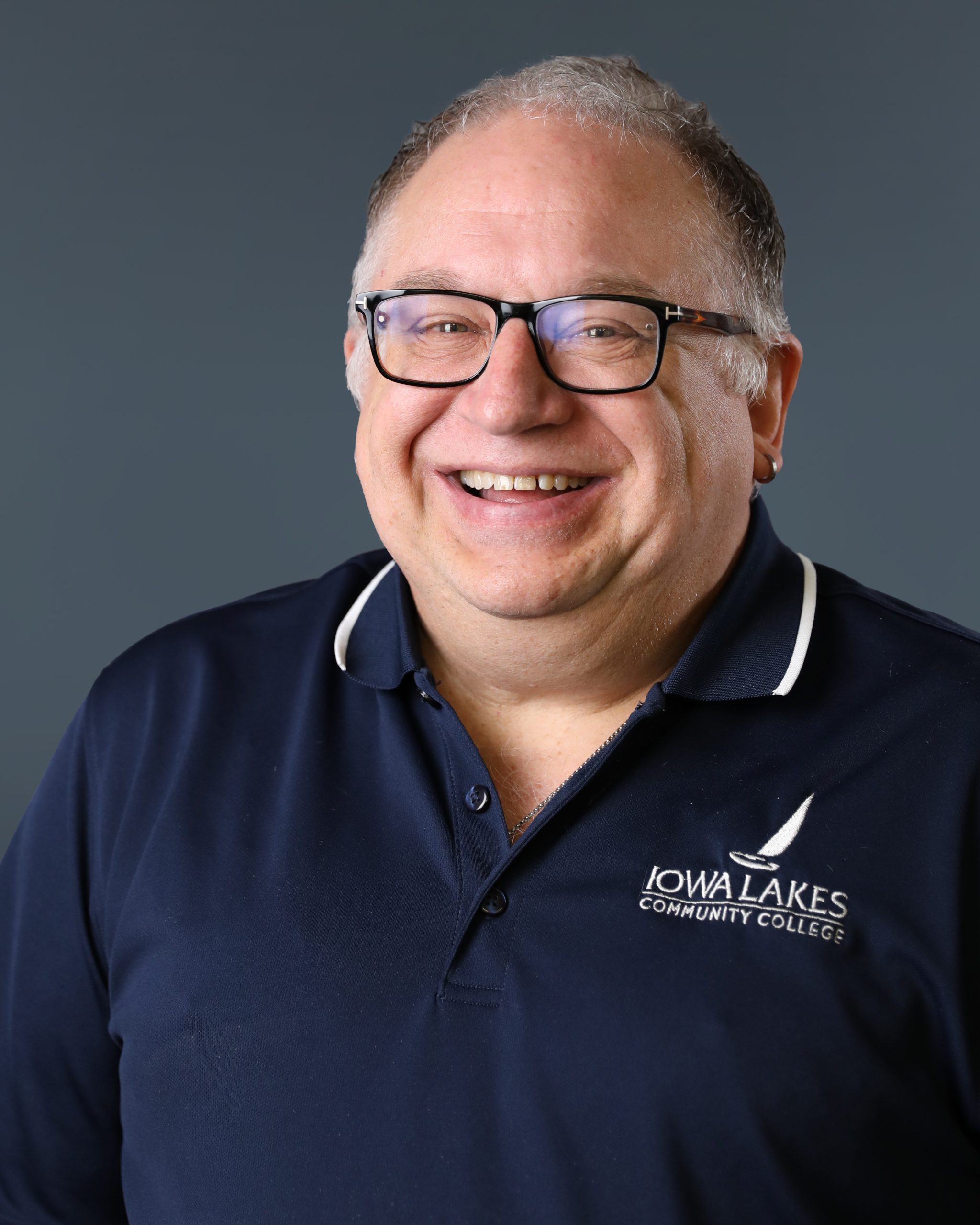 |
Kevin Pirie Surgical Technology Instructor/Program Coordinator 712-580-8658 | kpirie@iowalakes.edu Spencer Campus |
 |
Morgan Campbell Surgical Technology Instructor/Coordinator 712-580-8657 | mcampbell@iowalakes.edu Spencer Campus |