
Blog: The Value of Hands-On Learning: Why Experience Matters in College and Career Success
Reading about a skill is one thing. Practicing it is another.
Whether it’s caring for a patient, welding a joint, repairing an engine, piloting an aircraft, analyzing soil samples, or presenting a business proposal, students learn best when they can apply what they’ve learned in real-world situations.
That’s why hands-on learning has become one of the most effective approaches to higher education.
At Iowa Lakes Community College, hands-on learning isn’t an extra opportunity—it’s a core part of the student experience. Across our more than 60 career and transfer programs and options, students develop technical knowledge, critical thinking, and professional skills by learning through experience.
Whether students plan to enter the workforce after graduation or continue their education at a four-year institution, hands-on learning helps prepare them for long-term success.
Quick Takeaways
Hands-on learning helps students:
- Apply classroom knowledge in real-world settings.
- Build confidence through experience.
- Develop problem-solving and critical-thinking skills.
- Strengthen communication and teamwork.
- Prepare for careers through labs, simulations, internships, clinicals, and work-based learning.
- Graduate with experience employers value.
At Iowa Lakes Community College, applied learning is integrated throughout academic programs so students graduate prepared for both college and career success.
What Is Hands-On Learning?
Hands-on learning—also called applied learning—is an educational approach that allows students to actively apply concepts instead of only reading or hearing about them.
Rather than relying solely on lectures or textbooks, students gain experience by solving problems, practicing skills, collaborating with classmates, and working with equipment and technology similar to what they’ll encounter in their future careers.
Examples include:
- Laboratory experiences.
- Clinical rotations.
- Simulations.
- Internships.
- Apprenticeships.
- Work-based learning.
- Field experiences.
- Industry projects.
- Student teaching.
- Technical labs.
Research consistently shows students retain information more effectively when they actively participate in the learning process.
Why Hands-On Learning Matters
Knowledge is important—but employers also expect graduates to know how to apply it.
Hands-on learning helps students bridge the gap between theory and practice by giving them opportunities to make decisions, solve problems, and adapt to real-world situations before they enter the workforce.
Students who participate in applied learning often develop:
- Greater confidence.
- Stronger critical-thinking skills.
- Better communication.
- Improved teamwork.
- Increased adaptability.
- Higher engagement with coursework.
- Greater career readiness.
These are the same competencies employers consistently rank among the most valuable in new graduates.
Learning by Doing Builds Confidence
Confidence doesn’t come from memorizing information—it comes from applying it.
Every lab completed, simulation practiced, presentation delivered, or internship experience gives students another opportunity to refine their skills in a supportive learning environment.
By graduation, students aren’t experiencing many tasks for the first time. They’ve already practiced them repeatedly under the guidance of experienced faculty.
That confidence often leads to a smoother transition into the workforce or continued education.
How Iowa Lakes Brings Learning to Life
Hands-on learning looks different across every program, but the goal remains the same: helping students connect knowledge with real-world applications.
Depending on their field of study, Iowa Lakes students may:
- Apply human services skills in healthcare, salon, and massage therapy learning labs.
- Operate modern agricultural equipment and technology.
- Build projects in construction and skilled trades labs.
- Learn advanced welding techniques.
- Train on aviation equipment and aircraft.
- Complete internships with regional employers.
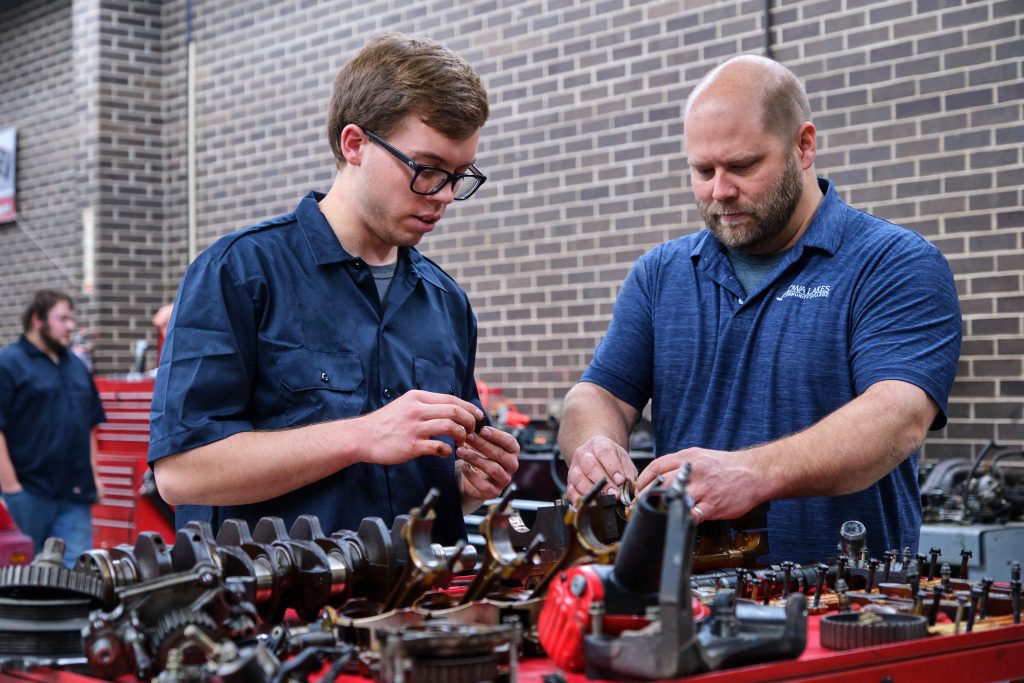
- Practice how to troubleshoot, service, and repair engines, machinery, and transportation systems.
- Collaborate on business and marketing projects.
- Conduct scientific research and laboratory experiments.
These experiences prepare students for careers by allowing them to practice in environments that reflect today’s workplaces.
Why Employers Value Experience
Employers consistently report that they’re looking for graduates who can contribute from day one.
Technical knowledge matters, but experience often sets candidates apart.
Through internships, clinical experiences, labs, and applied learning, Iowa Lakes students develop professional skills such as:
- Communication.
- Problem solving.
- Teamwork.
- Professionalism.
- Adaptability.
- Leadership.
- Time management.
These experiences help students understand workplace expectations before beginning their careers.
Hands-On Learning Supports Iowa’s Workforce
Applied learning doesn’t just benefit students—it strengthens communities and employers across Iowa.
According to the Iowa Department of Education’s 2025 Annual Condition of Iowa’s Community Colleges, Iowa community colleges continue to prepare students for high-demand careers throughout the state. The report notes that 91% of graduates are employed within one year of graduation, while 83% remain in Iowa, helping meet workforce needs across healthcare, agriculture, manufacturing, business, transportation, education, and the skilled trades.
These outcomes demonstrate the value of combining classroom instruction with practical experience that prepares students to contribute immediately after graduation.
Hands-On Learning by the Numbers
✔ 91% of Iowa community college graduates are employed within one year.
✔ 83% remain in Iowa after graduation.
✔ More than 76% of certificates, diplomas, and associate degrees awarded statewide are in career and technical education fields aligned with workforce needs.
✔ Iowa community colleges partner extensively with employers to provide internships, clinical experiences, and applied learning opportunities.
The Iowa Lakes Difference
At Iowa Lakes Community College, hands-on learning isn’t limited to one or two programs—it’s part of our educational philosophy.
Across our more than 60 career and transfer programs and options, students learn from faculty with industry experience while gaining access to modern equipment, simulation environments, laboratories, employer partnerships, internships, and clinical experiences.
Students graduate with more than a credential.
They graduate with experience, confidence, and the ability to apply what they’ve learned in meaningful ways.
That’s one reason Iowa Lakes graduates are well prepared to enter the workforce or continue their education.
Frequently Asked Questions About Hands-On Learning
What is hands-on learning?
Hands-on learning is an educational approach where students actively apply knowledge through labs, simulations, internships, clinical experiences, projects, and other real-world activities.
Why is hands-on learning important?
Hands-on learning helps students retain information, build confidence, strengthen problem-solving skills, and prepare for real workplace situations.
Does Iowa Lakes offer hands-on learning in every program?
While experiences vary by program, Iowa Lakes integrates applied learning opportunities throughout its career and transfer programs whenever appropriate, including labs, simulations, internships, clinicals, and collaborative projects.
Does hands-on learning help students get jobs?
Employers consistently value graduates who have practical experience in addition to technical knowledge. Applied learning experiences help students develop workplace skills and demonstrate career readiness.
Can transfer students benefit from hands-on learning?
Yes. Hands-on learning strengthens academic understanding and prepares students for upper-level coursework at four-year institutions while also building valuable professional skills.
Experience Creates Opportunity
The most meaningful learning happens when students move beyond theory and begin applying what they’ve learned.
Hands-on learning gives students the opportunity to make mistakes, ask questions, solve problems, and grow in supportive environments before those skills are expected in the workplace.
That’s why Iowa Lakes Community College continues to invest in learning experiences that prepare students not only to earn a degree, but to build successful careers and meaningful lives.
Ready to Learn by Doing?
If you’re looking for a college where learning extends beyond the classroom, Iowa Lakes Community College offers opportunities to gain real-world experience from your first semester forward.
Explore our more than 60 career and transfer programs and options, schedule a campus visit, or connect with our Admissions team to discover how hands-on learning can help you prepare for your future.
Sources
- Iowa Department of Education. 2025 Annual Condition of Iowa’s Community Colleges.
- National Association of Colleges and Employers (NACE). Career Readiness Competencies.
- Association for Experiential Education. Experiential learning principles.
- Iowa Workforce Development. Workforce outlook resources.